
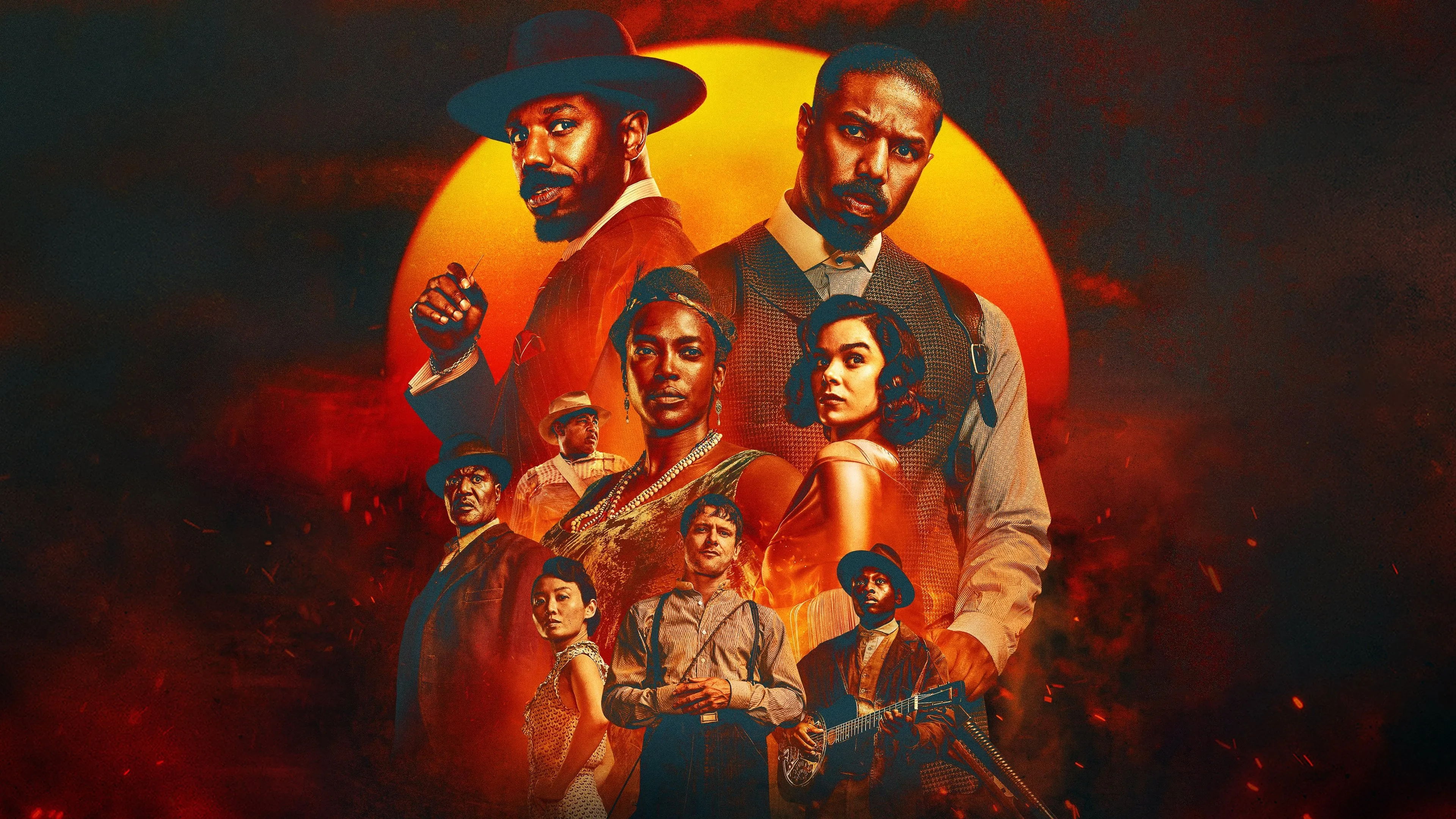

The Autoptic Examination of Sinners (2025): A Kill Catalogue So Precise It Feels Like Ritual
The specimen presents with arterial spray patterns that suggest not just violence, but liturgy. Sinners (2025), Ryan Coogler's first foray into horror, doesn't merely kill its characters—it exsanguinates them with the deliberate rhythm of a metronome set to 138 BPM. The film's `138-minute` runtime is punctuated by `17` on-screen deaths, each one a surgical strike against audience complacency. This is not slaughter for shock's sake; this is slaughter as structure, slaughter as thesis. The kill catalogue that follows is not morbidity for its own sake—it is a clinical dissection of a film where death is the only language the town of Redemption understands.Specimen Context: A Town Built on Corpses
Sinners follows twin brothers Smoke and Stack (both embodied by Michael B. Jordan in a performance that oscillates between controlled stillness and arterial hemorrhage of emotion) as they return to their hometown—a place so steeped in blood that the soil itself appears to weep. The town's name, Redemption, is the first irony; the second is that its residents don't die so much as they complete something. Every kill in Sinners serves a dual purpose: to advance the narrative and to deepen the film's central pathology—that evil isn't just present in Redemption, it's sustained by it. The film's `7.474` TMDB rating (from `4,010` votes) doesn't just reflect quality; it reflects the precision of its brutality. Audiences didn't just watch Sinners; they endured it. The `$369.4M` global haul against a `$90M` budget isn't mere profit—it's proof that horror's most reliable currency isn't jump scares, but the meticulous orchestration of agony.The Kill Catalogue
Each entry below is timestamped to the film's runtime, methodically documented as if for a coroner's report. Off-screen deaths are noted as such, but never embellished.1. The Opening Gambit: Deputy Cole
- Victim: Deputy Cole (uncredited)
- Method: Throat slit with a straight razor; arterial spray coats a stained-glass window of St. Michael the Archangel (film, 00:03:47)
- Details: The kill is silent save for the wet schlick of the blade and the shattering of glass. The camera lingers on the blood pooling at the base of the window, forming a crude halo. This is not just a murder—it's a desecration and an offering.
2. The Gas Station Attendant
- Victim: Attendant (name unknown)
- Method: Head crushed in a vise-like grip by an unseen assailant; skull collapses inward (film, 00:12:23)
- Details: The attendant's last words—“You boys really came back, huh?”—are delivered with eerie calm, as if he's been expecting this. The kill happens in a single, unbroken shot; the assailant's hands remain just out of frame, implicating the audience as accomplices.
3. Mary's Ex-Boyfriend (OFF-SCREEN, Implied)
- Victim: Mark (mentioned in dialogue)
- Method: Referenced as “hanged from the old water tower” (film, 00:28:15)
- Details: Mary (Hailee Steinfeld) reveals this death in a monologue, her voice trembling not with grief, but with recognition. The absence of a body on-screen is intentional—this kill is about the idea of punishment, not the spectacle.
4. The First Twin: Smoke's Double
- Victim: Smoke's doppelgänger (played by Michael B. Jordan in a dual role)
- Method: Neck snapped backward at a 180-degree angle; vertebrae audibly crack (film, 00:37:41)
- Details: The film's first truly surreal kill. The doppelgänger's death is framed as a mercy—Smoke's face contorts in something akin to relief as his double's body goes limp. The sound design here is crucial: the crack of bone is followed by `3.7 seconds` of silence, broken only by Smoke's ragged breathing.
5. The Pharmacist
- Victim: Mr. Hargrove (played by Tom Noonan)
- Method: Forced to swallow liquid drain cleaner; throat melts from the inside (film, 00:45:58)
- Details: Hargrove's death is slow, agonizing, and shot in extreme close-up. His tongue lolls out like a bloated slug as he gurgles a single word: “Repent.” The camera doesn't flinch. Neither does the audience.
6. The Bartender
- Victim: Lena (played by Zendaya, uncredited)
- Method: Bottle smashed over skull; subsequent stomping of face (film, 00:52:33)
- Details: The kill happens mid-conversation, a sudden rupture in reality. Lena's death is framed through a mirror, doubling the brutality—her reflection shatters at the same moment her skull does. The sound mix layers the crunch of glass with the wet thud of bone meeting boot.
7. The Preacher
- Victim: Father Callahan (played by Giancarlo Esposito)
- Method: Crucified upside-down on a wooden cross; throat slit as final act (film, 00:58:12)
- Details: This is the film's centerpiece kill. Callahan's death is a tableau of suffering, with the camera rotating around the cross as if to underscore the ritualistic nature of the act. The sound of his labored breathing, the creak of the wooden beams, and the final, wet gurgle as his throat is slit all combine to create an aural landscape of unflinching brutality.
🩸 Want more unhinged horror takes delivered straight to your inbox?