


Here's the thing nobody warns you about with this movie. You spend two hours thinking you're watching a family fall apart. You're not. You're watching a setup get sprung. So here's the Hereditary ending, explained: the treehouse, the crown, the headless bodies, and the part most recaps skip — the family never had a shot. Not for one frame. Ari Aster built a trap and then filmed the family stumbling around inside it, and he showed you the wire the whole time.
So let's get into what actually happens to Peter, and why the cult of Paimon wins before the credits even think about rolling.
The short version of the ending
Peter wakes up to find his mother, Annie, floating in the dark, sawing her own head off with a wire. He runs. He hides in the attic. Annie's body follows him up there, still working that wire across her own neck. Peter, out of his mind with terror, throws himself out the attic window.
He dies on impact. Then a light enters him and he gets back up.
He walks to the treehouse in the backyard. Inside, the cult is waiting. The decapitated bodies of his mother and his grandmother are kneeling. A shrine to his dead sister, Charlie, stands there with her severed head crowning a mannequin. Joan — the sweet old lady from grief group — places a crown on Peter and tells him he is Paimon, one of the eight kings of Hell. The cult bows. "Hail Paimon." Camera pulls back. End.
That's the ending. Now here's what it means.
Who is Paimon, and why does the cult need Peter specifically?
Paimon is a demon — in the film, one of the eight kings of Hell. The cult, led for years by Peter's grandmother Ellen (they called her "Queen Leigh"), wants to give Paimon a body. A permanent host. But Paimon is picky. He wants a male host, and he wants one with a vulnerable, broken spirit.
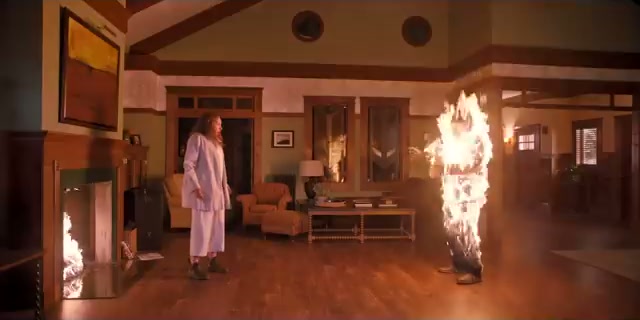
That's the whole movie in one sentence. The cult isn't trying to scare this family. It's trying to wear one of them down to nothing so there's room for something else to move in.
Ellen tried to do this with Peter when he was a baby — that's why Annie, his mother, kept him away from her. So the cult pivoted to Charlie. Watch the early scenes again. Ellen's obsession with Charlie wasn't grandma love. It was prep work, conditioning the girl to be a vessel. Charlie even makes that clucking sound and sleeps out in the cold like she's already half somebody else.
But Charlie was always the wrong body. Paimon needed a male host. Charlie was the bait.
The decapitations aren't random — they're the method
Two heads come off in this film, and a third gets displayed. None of it is shock for shock's sake.
Charlie. Peter takes her to a party, she eats cake with nuts, her airway closes. He floors it toward the hospital. Charlie leans out the window for air. Peter swerves to miss a dead animal in the road and clips a telephone pole — and Charlie, head out the window, is decapitated instantly. (Aster has said the image of a kid's head getting knocked off was one of the first things that came to him before he ever wrote a word.)
Now here's the gut-punch detail. Carved into that exact telephone pole is the sigil of Paimon. Aster planted it on screen less than ten minutes before the crash. Charlie's death looks like the worst accident in the world. It wasn't an accident. The cult steered her into that pole. The bait had to die so the real plan could start.
Annie. By the third act, Annie is fully possessed — turned into the cult's instrument. Aster has said the image of a mother so destroyed she has to saw off her own head was another of those first visions. That's not Annie choosing to die. That's Paimon clearing the room. Her decapitated body kneels in the treehouse at the end as an offering.
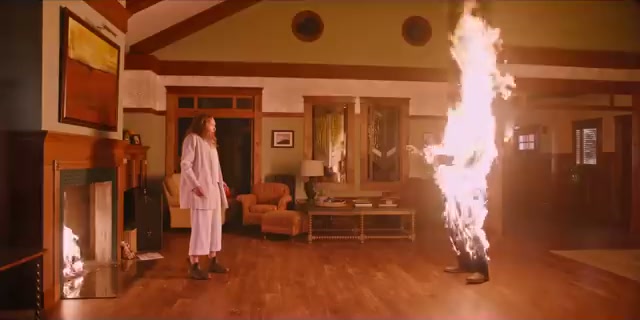
Ellen. Grandma's headless body is in there too, exhumed and arranged, because she started this and her corpse gets a front-row seat to the payoff.
The heads matter because Paimon, in the lore the cult follows, is honored through specific ritual. Decapitation is the offering. The cult didn't lose three women. It spent them.
The séance was the real attack
People remember the séance as the scene where things go sideways. It's actually the moment the cult lands the killing blow on Annie.
Joan — who Annie meets at a grief support group, who seems like the one kind person in this whole nightmare — teaches Annie how to make contact with the dead. Joan claims she's been talking to her own dead grandson. It's a lie. Joan is the cult's second-in-command, Ellen's oldest friend and partner in the whole operation. There is no dead grandson. The "spirit" Annie summons isn't Charlie. It's Paimon, wearing Charlie's voice like a coat.
Annie brings the séance home and runs it on her own family. She thinks she's reaching her daughter. She's opening the front door and inviting the demon in. Every move she makes to fix her grief is a move the cult scripted for her.
That's the cruelty of it. The family's love, their guilt, their grief — all of it gets turned into the weapon used against them.
Why the treehouse coronation means they never had a choice
This is the part to sit with. By the time Peter throws himself out that window, every piece is already placed. His sister is dead on schedule. His mother is a puppet. His father, Steve, has already burned alive after refusing to believe any of it. The house is full of Paimon's sigil — it's on Ellen's necklace in the casket, carved on the pole, painted in Joan's house, smeared in blood on the attic wall above Ellen's corpse. The signs were everywhere from the first funeral.
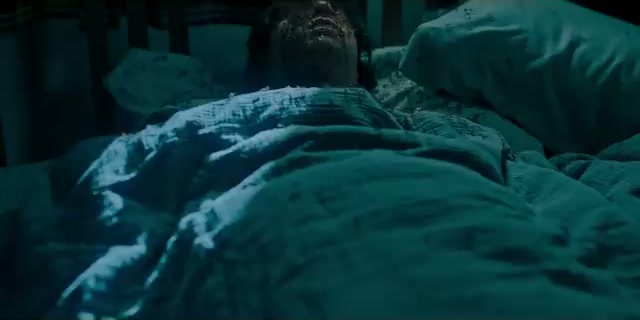
Peter's whole arc — the guilt over Charlie, the terror, the breakdown — that's not the cost of the plan. It IS the plan. Paimon needed a broken spirit, so the cult broke him. The trauma was the softening process. When he jumps and dies, his fractured mind is exactly the open, empty thing Paimon's been waiting for.
So the body gets up. Peter's still in there in some technical sense — his physical self survives — but his consciousness is wiped to make room. The kid who walks into that treehouse isn't Peter anymore.
Joan crowns him. The cult bows. They tell him he's been given a proper male body at last, and that everything — every death, every haunting — was correction. They weren't reacting to a tragedy. They were running a years-long machine, and it finished on time.
The treehouse is where the whole thing was always headed. That's why it's the payoff and not a twist. A twist surprises you. This just closes a circle Aster drew in the opening shot.
A few things worth knowing about the film itself
Hereditary came out in 2018, written and directed by Ari Aster as his feature debut. It stars Toni Collette, Alex Wolff, Milly Shapiro, Ann Dowd, and Gabriel Byrne, and it hit U.S. theaters that June. It put Aster on the map overnight and still gets argued about as one of the nastiest family-curse movies ever made.
The kicker
You didn't watch a family get destroyed by a demon. You watched a cult fill out a work order. The window jump isn't a tragedy — it's the last box getting checked. Hail Paimon, and pay attention to the telephone poles.