
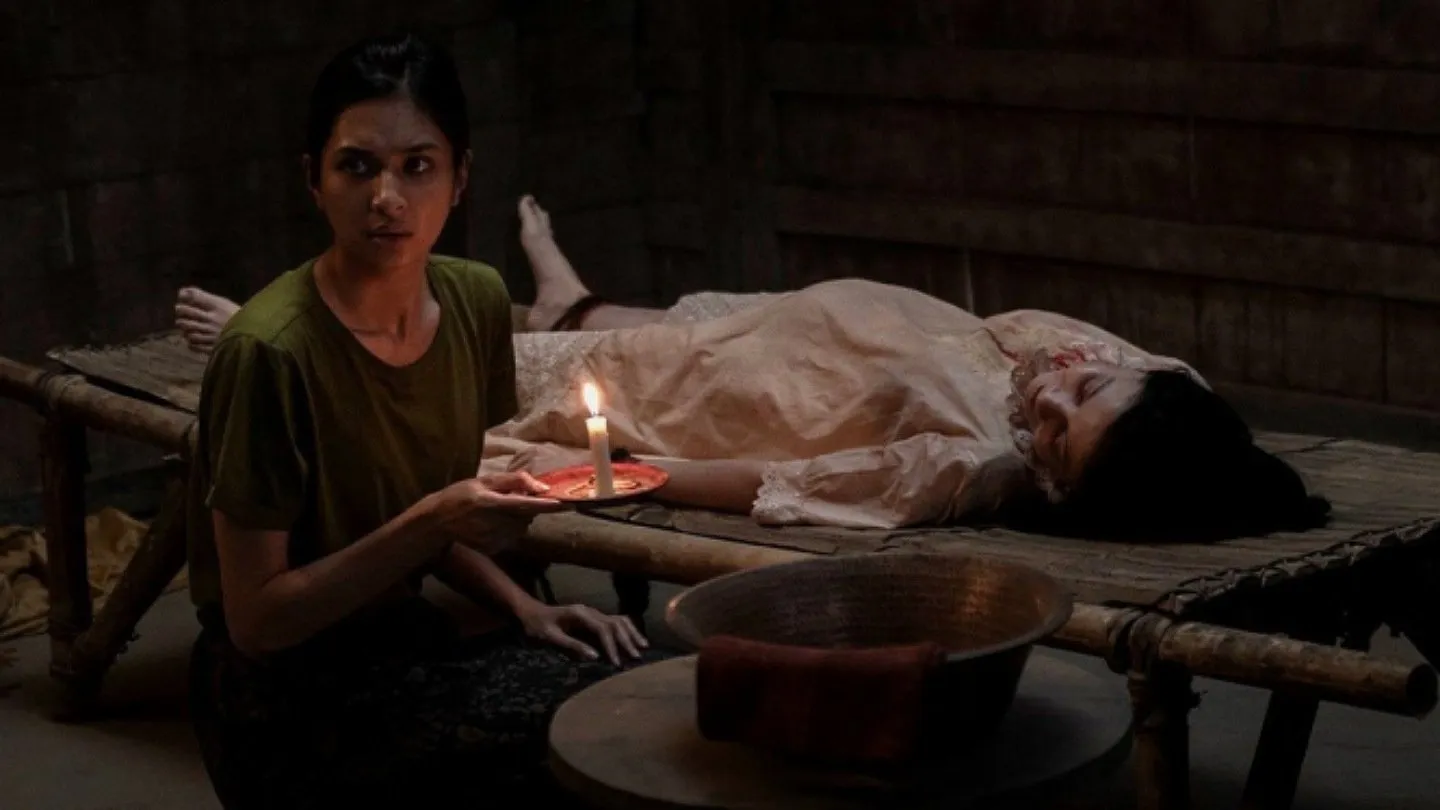

Janur Ireng is the 2025 Indonesian folk-horror prequel to Sewu Dino, and the title is the first piece of the curse. Directed by Kimo Stamboel, the film follows siblings Sabdo and Intan after a fire destroys their home and a wealthy uncle draws them into the Kuncoro family mansion. What looks like rescue is the opening move in a war fought with bloodlines, servants, and black magic.
JANUR IRENG QUICK ANSWERS
- Meaning: The Javanese words translate literally to “black young coconut leaf,” often shortened in English to “black coconut leaf.”
- True story: No verified true case is attached to the film. It is an adaptation of SimpleMan’s horror novel.
- Timeline: The story opens in East Java in 1997, six years before the central events associated with Sewu Dino.
- Release: MD Pictures released the 94-minute film in Indonesian cinemas on December 24, 2025.
- Streaming: Netflix lists the film in Indonesia with English and Indonesian subtitles; availability varies by country.
WHAT DOES JANUR IRENG MEAN IN ENGLISH?
Janur is a young coconut leaf. Ireng means black in Javanese. Put together, the title means “black young coconut leaf” or, more naturally, “black coconut leaf.” The movie uses that phrase as the name of an exceptionally destructive curse, not as the name of its monster.
That distinction matters because the horror is organized like a weapon. The curse is built to move through a family line, and the people performing it must decide whose blood counts as a target. The title points to the ritual that turns the Kuncoro family’s private cruelty into a massacre.
IS JANUR IRENG BASED ON A TRUE STORY?
Janur Ireng is not presented by its authoritative film sources as a verified true story. Indonesia’s Film Censorship Board identifies it as an adaptation of a horror novel by SimpleMan, while Netflix classifies it as a movie based on a book. There is no reliable documentation tying Sabdo, Intan, Arjo Kuncoro, or the Janur Ireng ritual to a confirmed historical case.
The clean answer is that this is fiction drawn from SimpleMan’s interconnected horror mythology. Its family structures, language, and ritual imagery give it cultural specificity; that is different from evidence that the plot happened.
WHERE DOES THE PREQUEL FIT IN THE SEWU DINO TIMELINE?
The opening date card places Janur Ireng in East Java in 1997. The story is set six years before Sewu Dino and supplies the missing history behind the Kuncoro–Atmojo feud. It also shows younger versions of figures whose choices continue into the later curse, including Sabdo, Sugik, and Karsa Atmojo.
Release order is still the clearer way to watch the two films: Sewu Dino first, then Janur Ireng. Chronological order reverses them, but the prequel’s final turn is built to make viewers recognize how one curse creates another.
WHAT IS JANUR IRENG ABOUT? SPOILER-FREE
Sabdo, played by Marthino Lio, and his younger sister Intan, played by Nyimas Ratu Rafa, lose the home inherited from their parents in a fire. Arjo Kuncoro, played by Tora Sudiro, arrives claiming to be their uncle and offers them a place inside his wealthy family’s estate.
Arjo’s generosity is a trap. The mansion is protected by a system of human vessels and demonic servants, and Intan has been selected to replace Arjo’s failing wife, Lasmini, in that system. Rival members of the Seven Families see Sabdo’s desperation as their chance to break Kuncoro power with the Janur Ireng curse.
JANUR IRENG ENDING EXPLAINED
Full spoilers begin here. Arjo plans to use Intan as the next Ranum, the human shield sustaining his family, and to force her into producing a new Canguk Songo. Sabdo wants only to save his sister. Karsa Atmojo and her allies turn that love into leverage, persuading him to help cast Janur Ireng against Arjo and the Kuncoro line.
The ritual works with a brutal exception: it attacks the Kuncoro family but spares the Canguk Songo. Sabdo survives because he has become that figure. Intan does not. Karsa reveals that Sengarturih, her family’s demonic servant, was sent to possess Intan. The supposed rescue was another family’s attack, and Sabdo discovers too late that both sides treated the siblings as tools.
Karsa then offers to teach the grieving Sabdo how to master Sewu Dino. That final promise is the bridge to the 2023 film: Janur Ireng does not end the war between the families. It gives Sabdo the motive and the weapon that carry the curse toward the Atmojo bloodline.
WHO SURVIVES JANUR IRENG?
Sabdo survives the Janur Ireng event because the curse excludes the Canguk Songo, the role the ending assigns to him. Intan dies after Sengarturih’s possession. Karsa survives long enough to offer Sabdo instruction in Sewu Dino, ensuring the family conflict continues beyond the prequel.
WHO MADE JANUR IRENG?
Kimo Stamboel directed the film and shares screenplay credit with Khalid Kashogi and Pria Sederhana. MD Pictures produced it, with Manoj Punjabi credited as producer. The principal cast includes Marthino Lio, Nyimas Ratu Rafa, Tora Sudiro, Masayu Anastasia, Rio Dewanto, Faradina Mufti, Karina Suwandi, and Givina Lukita.