The Dreadful: How Natasha Kermani Exhumes Onibaba for the Dark Ages
ScreamDesk Staff
•February 18, 2026•6 min read
The Dreadful: How Natasha Kermani Exhumes Onibaba for the Dark Ages
In the winter of 1964, Kaneto Shindō's Onibaba emerged from the mud of feudal Japan and into the collective nightmare of global cinema—two women, one son lost to war, the other to starvation, surviving in a sea of susuki grass by luring samurai into a pit trap, stripping their corpses of armor, and selling it for millet. The film was a howl of survival, a feral inversion of the noble warrior myth, its black-and-white frames so stark they felt carved into the film stock itself. Now, sixty years later, director Natasha Kermani has taken that same myth—not as homage, not as pastiche, but as excavation—and dragged it, kicking and screaming, into the Dark Ages of medieval Europe with The Dreadful, a reimagining that doesn't just transplant the story but reanimates its soul for an era where the line between saint and monster was already dissolving in the blood of the Crusades.
To understand what Kermani has unearthed, you must first understand what Shindō interred. Onibaba (1964) was never just a folk horror tale; it was a document of a society in collapse. Japan in the 1960s was lurching toward economic miracle, but Shindō, who had lived through the firebombing of Tokyo, remembered the hunger, the desperation, the way war hollowed out morality until survival was the only sacrament. His film took place in the 14th century, during the Nanboku-chō period—a time of civil war, famine, and the slow unraveling of the samurai class. The women of Onibaba are not villains; they are artifacts of that unraveling, their theft of armor not greed but necessity, their sexuality not sin but currency in a world where men were either already dead or too weak to protect them. The famous pit trap, that yawning maw of mud and sharpened stakes, wasn't just a set piece—it was a metaphor for the way war consumes everything, even the people who feed on its scraps.
Kermani, in her own words, saw in Onibaba not just a story of women surviving, but a blueprint for how horror could interrogate the myths we build around suffering. "The original film is about the absurdity of waiting for a man who will never return," she told Bloody Disgusting, "and how that waiting can curdle into something monstrous." That curdling is the heart of The Dreadful, which transplants the narrative to 12th-century Europe, a time when the Crusades had emptied villages of men, leaving women to either starve or reinvent themselves as something other than wives. The shift in setting isn't arbitrary; if Onibaba was about the physical hunger of war, The Dreadful is about the spiritual hunger—a world where the Church's promise of salvation is just another kind of trap, and the women who step outside its grace are labeled as witches, hags, or worse.
What makes Kermani's approach so vital is how she doesn't just update the aesthetics (though the move from susuki grass to European marshland is striking) but excavates the deeper rot beneath the original story. Shindō's film was famously criticized in Japan for its "immorality"—the nakedness of the women, the way their desires were treated as neither shameful nor celebratory, but inevitable. Kermani's Europe, by contrast, is a place where desire is weaponized by the Church, where the female body is either a vessel for God's will or a snare for the Devil's. The mother-in-law of Onibaba was a survivor; the equivalent figure in The Dreadful is something closer to a penitent, a woman who has internalized the language of sin so deeply that her monstrosity isn't just survival—it's redemption.
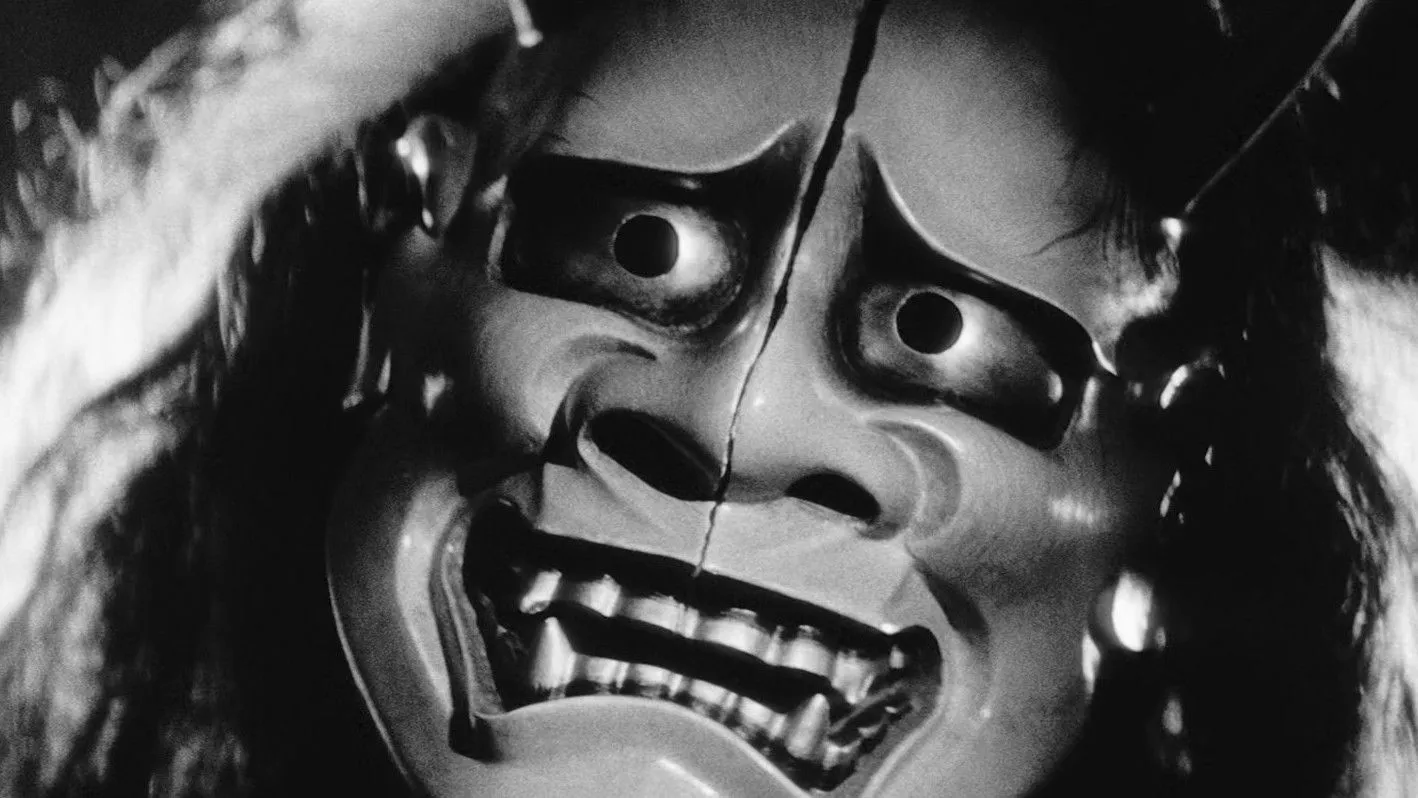
This is where the lineage of folk horror intersects with something darker: the theology of fear. Folk horror has always been about the land, the old gods, the way nature resists human order. But Onibaba and The Dreadful aren't about gods—they're about people who have been abandoned by them. In Shindō's film, the women's descent into violence is a rejection of the samurai code; in Kermani's, it's a rejection of the Church's. The demon mask of Onibaba's climax—a grotesque, leering thing that terrifies the younger woman into submission—isn't just a jump scare; it's a symbol of the way trauma distorts love, turning it into something predatory. Kermani's version, one suspects, will take that distortion even further, not just as psychological horror but as religious horror, the kind where the monster isn't a demon but the idea of one.
The most fascinating choice Kermani makes is the temporal leap. Onibaba was set in a specific, historical famine; The Dreadful unfolds in the "Dark Ages," a term historians have long since debunked as a myth of backwardness. But Kermani isn't using it as history—she's using it as atmosphere, a time when the world felt limitless in its cruelty, when the rules of civilization were as malleable as the marshland that swallows the unwary.

 ScreamDesk Staff