The Mummy That Would Not Stay Buried: How The Mummy Returns (2001) Became the Coffin Nail for Hollywood’s Last Golden Age of Spectacle
ScreamDesk Staff
•February 19, 2026•4 min read
The Mummy That Would Not Stay Buried: How The Mummy Returns (2001) Became the Coffin Nail for Hollywood’s Last Golden Age of Spectacle
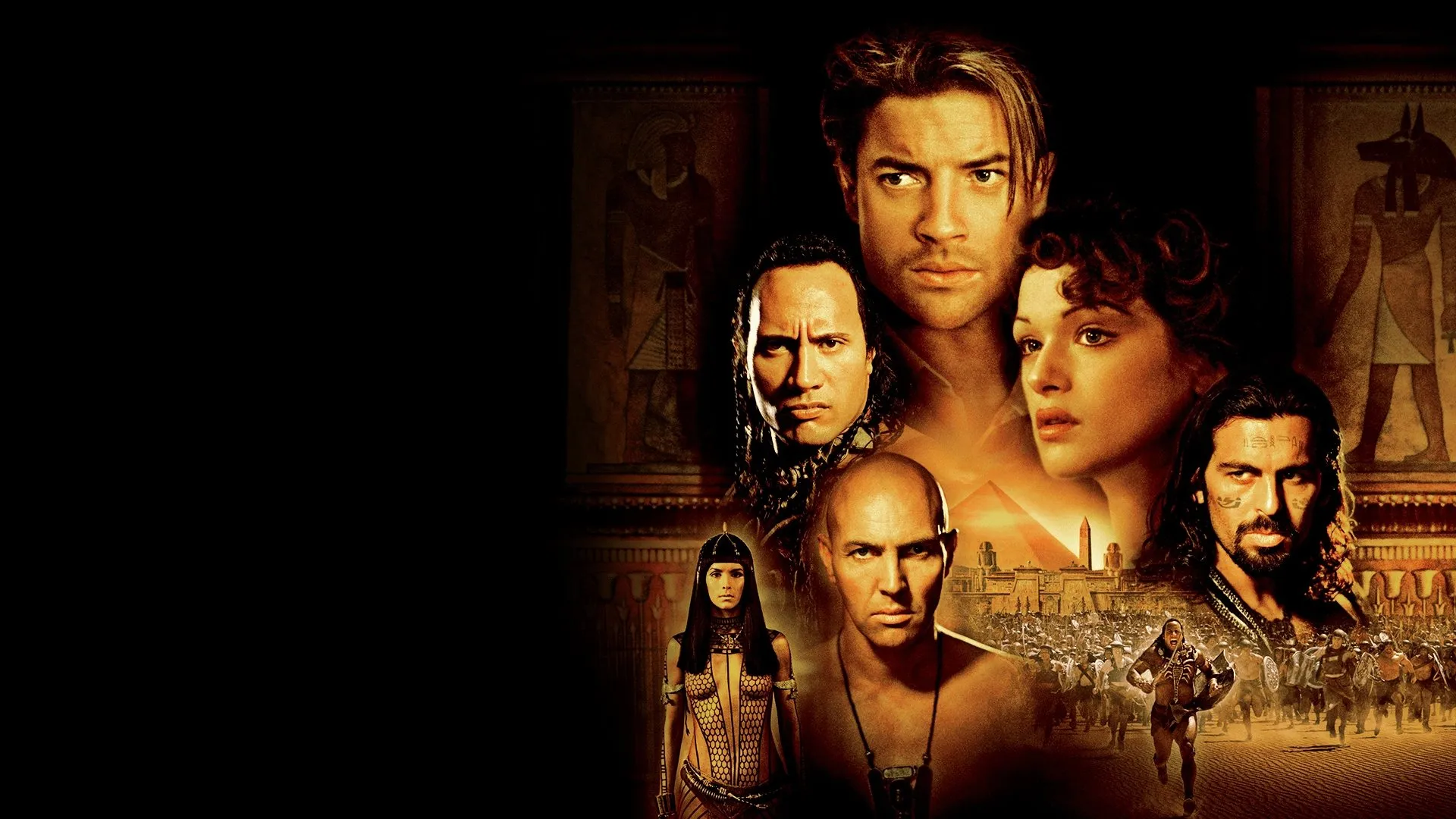
In the final minutes of Jaws 3-D (1983), a great white shark lunges toward the screen in a burst of foam and anaglyph terror—an effect so cheap it might as well have been stapled to the film stock. Eighteen years later, as a scarab beetle skitters across Rachel Weisz’s outstretched palm in The Mummy Returns (2001), the illusion is seamless: a practical creature, digital shadow, and live-action actress are fused into a single, breathing organism. Universal didn’t just upgrade the technology; it buried the old way of doing things alive. And when the studio exhumed The Mummy Returns for a 25th-anniversary re-release this March, the film doesn’t return as a celebration—it slithers back as a corpse, a memento mori for the kind of blockbuster that once believed spectacle could be earned rather than purchased.
The original The Mummy (1999) had been a resurrection in its own right, dragging Universal’s classic monsters out of the tar pits of Hammer torpor and into the neon glow of a new millennium. However, it was the sequel—released a scant two years later—that dared to escalate the stakes not just in scale, but in ambition. Where the first film had been a romping adventure pastiche, The Mummy Returns dug deeper, unearthing an entire lost civilization beneath the sand, complete with a child psychic who sees the future in hieroglyphs, a golden army that reforms itself from shattered fragments, and a climax set in a collapsing pyramid that owed more to Ray Harryhausen than to James Cameron. The $98 million budget was enormous for the time, but the film recouped it threefold, proving that audiences would still turn out for spectacle that felt handmade—even when it wasn’t.
Yet, the very elements that made The Mummy Returns a triumph also sealed its fate. The film’s blend of practical effects and early CGI was a high-wire act, one that required a delicate balance between illusion and excess. The sandstorm that swallows a convoy in the opening act wasn’t just a digital effect—it was enhanced by wind machines and sand cannons on set, a marriage of old and new Hollywood techniques that director Stephen Sommers insisted upon. However, by the time the film’s third act rolled around, the seams began to show. The CGI Anubis warriors, while groundbreaking for 2001, moved with the uncanny valley stiffness of early motion-capture. The film knew it was pushing limits, and in that hubris, it revealed the first cracks in the foundation of the modern blockbuster.
What followed was not evolution, but excavation. Universal, drunk on the success of its "Dark Universe" predecessor, greenlit The Mummy: Tomb of the Dragon Emperor (2008), a film that jettisoned most of what made the first two entries special. Gone was the sense of discovery, replaced by a muddy, green-screened sludge that felt like a rough cut of a video game. Gone, too, was Rachel Weisz’s Evelyn Carnahan, recast with Maria Bello in a decision so baffling it might as well have been a curse. The film’s $145 million budget (nearly 50% more than Returns) was sunk into a production so troubled that even Brendan Fraser, once the franchise’s beating heart, seemed to be sleepwalking through his performance. When the film barely cleared its budget domestically, it wasn’t just a box-office disappointment—it was a death knell. The Dark Universe, Universal’s planned cinematic universe of monsters, was buried alongside Imhotep in the rubble of its own ambition.
The re-release of The Mummy Returns this month is less a revival than a wake. The film arrives in theaters at a time when the very idea of a theatrical spectacle has been hollowed out by algorithm-driven tentpoles and streaming wars. The sandstorm that once made audiences gasp now feels quaint—a relic of a time when blockbusters still had weight, when a director could frame a shot around a practical effect and trust that the audience would lean in. Today, spectacle is measured in runtime and VFX shot count, not wonder. The Mummy Returns wasn’t just the peak of its franchise; it was the last gasp of a Hollywood that still believed in the magic of the movies. If history is any teacher—and in horror, it always is—then the re-release of this film is not a resurrection, but a warning. The tomb is open, the curse is spreading, and the thing that clawed its way out isn’t Imhotep. It’s the future. And it looks an awful lot like the past.

 ScreamDesk Staff