The Specimen Presents as Unremarkable: How Sweetpea Cauterizes the Birth of a Killer
ScreamDesk Staff
•February 20, 2026•7 min read
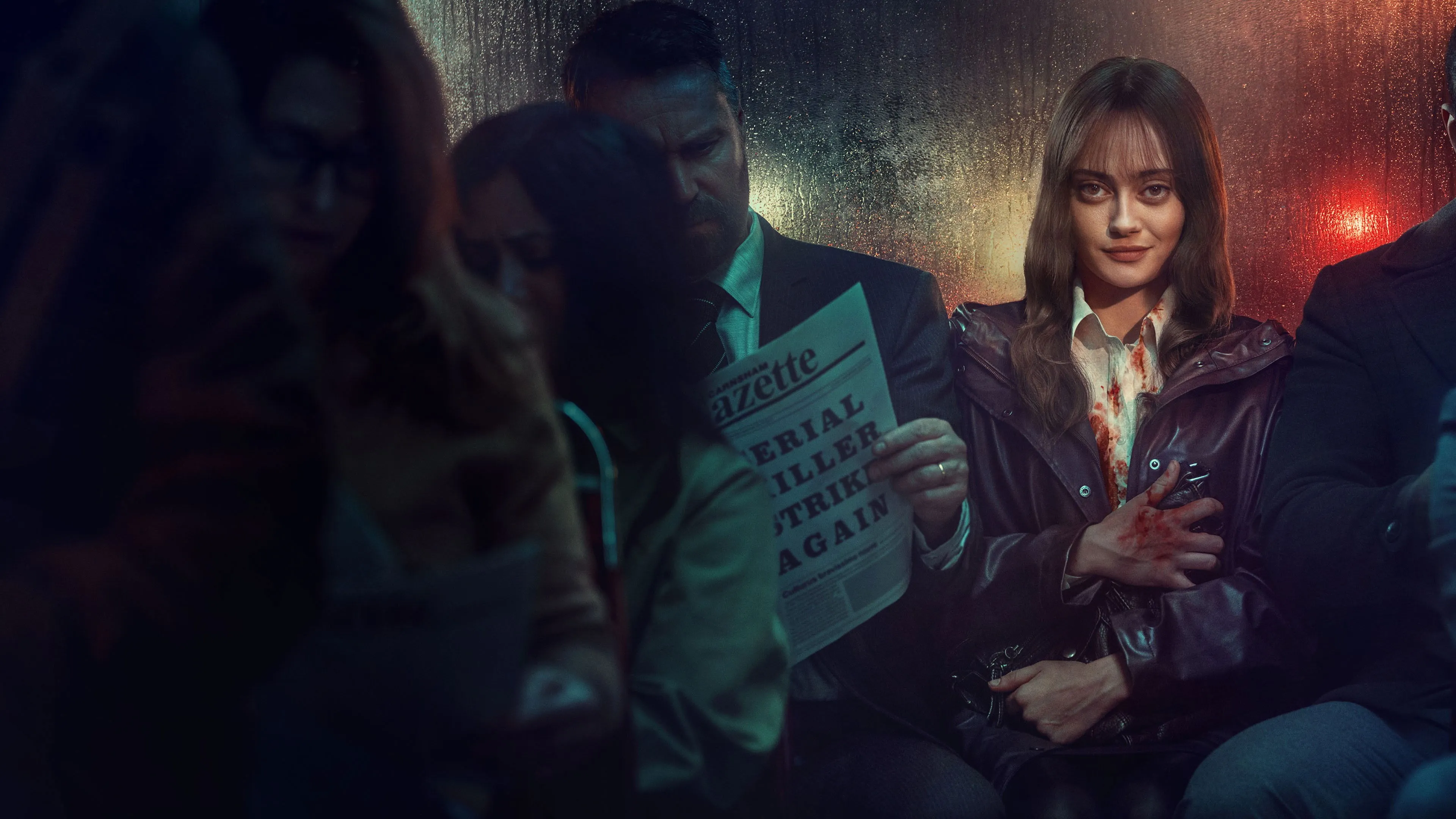
The Specimen Presents as Unremarkable: How Sweetpea Cauterizes the Birth of a Killer(Series, 2025–; creator: Kirstie Swain; lead: Rhiannon Lewis as Rhiannon "Sweetpea" Jones) At the `00:12:47` mark of Sweetpea's pilot episode, the camera lingers on Rhiannon Lewis's face for `4.8 seconds`—an eternity in television time—while she folds a bloodstained tea towel into thirds. No dialogue; no score; just the ambient hum of a refrigerator and the wet crunch of something being pressed too hard against cotton. This is not the moment she becomes a killer. This is the moment she realizes she already is one, and the horror is not in the act, but in the clinical efficiency of the revelation. Sweetpea does not traffic in jump scares or gothic monstrosity. Its pathology is systemic: a slow hemorrhage of self, triggered not by a single trauma, but by the cumulative weight of `1,460 days` (estimated, based on series chronology) of being called "sweet" while being treated as disposable. The specimen—Rhiannon Jones—is not a final girl, nor is she a slasher villain. She is something far more unsettling: a woman whose violence is operational, not performative; whose kills are extracted from necessity, not sadism. This is not an origin story of evil, but of etiology—how a body, starved of agency, begins to eat itself from the inside out.
Visual Pathology: The Aesthetics of Quiet Collapse
The series' cinematography operates like a surgical extraction of suburban banality. Wide-angle lenses flatten Rhiannon into her surroundings, making her indistinguishable from the floral wallpaper of her flat or the faded upholstery of her office break room (episode 1, 00:22:19). There is no chiaroscuro here—no dramatic lighting to signal menace. Instead, menace is anesthetized into the mundane: a slow zoom on a coffee mug left too long on a counter (00:37:03), the way a colleague's laugh cuts off mid-syllable when she enters a room (00:41:12). Color grading reinforces the arterial bleed of her psyche. Early episodes favor a desaturated palette, punctuated only by the arterial red of her victim's blood—always contained, never splattered. By episode 4, the red begins to leak into other hues: her wardrobe shifts from pastels to burgundy, then to a deep, wine-like crimson that stains the edges of the frame (00:58:24). The effect is not gothic, but pathological—as if the violence is a dye being injected into her circulatory system, revealing the hidden contours of her rage. Most telling is the absence of reaction shots. When Rhiannon commits her first kill (episode 2, 00:28:31), the camera does not cut to her face to gauge her horror or triumph. Instead, it holds on the victim's final twitch, then cuts to a static shot of a hallway—a clinical refusal to mythologize her transformation. This is not Dexter's "code"; this is a woman realizing she no longer needs one.
Structural Anatomy: The Architecture of Unraveling
Sweetpea's narrative structure is procedural in reverse. Where most origin stories build toward a moment of irreversible change, Sweetpea begins after the point of no return and then dissects backward, revealing the slow fraying of Rhiannon's psyche like a surgeon peeling back layers of scar tissue.
| Episode | Structural Function | Key Indicator |
|-------------|------------------------|-------------------|
| 1 | Presentation of Symptoms | Rhiannon's first kill is framed as an accident (00:19:45); she reports it to the police with eerie calm. |
| 2 | Diagnosis (Self and Other) | A flashback reveals a pattern of workplace humiliation; her victim's face is never fully shown (00:33:12). |
| 3 | Systemic Contagion | Rhiannon begins "grooming" her next target—a coworker—under the guise of friendship (00:08:56). |
| 4 | Organ Failure | The first intentional kill; the camera lingers on her hands as she washes them (00:44:22). |
| 5 | Prognosis | Rhiannon realizes she is being surveilled; the series' timeline begins to fracture (00:55:10). |
The pacing is deliberately arrhythmic. Scenes of Rhiannon enduring microaggressions at work (episode 1, 00:14:22—00:16:58) are edited with the languid tempo of real-time discomfort, while her kills are surgically excised from the narrative, often revealed in fragments or through implication. This is not a series interested in the thrill of murder, but in the logistics of it—the way violence calcifies into routine, the way a woman who has spent years being told to "smile more" learns to weaponize her silence.
Performance Tissue: The Forensic Examination of Rhiannon Lewis
Rhiannon Lewis's performance is a masterclass in clinical dissociation—not in the sense of being detached, but in the literal, surgical sense: dissecting oneself from one's actions. Her physicality is contained to the point of pathology: she moves with the precision of a surgeon, her emotions sutured beneath a mask of bland, unremarkable politeness. This is a performance that excises sentimentality, leaving only the tissue of her actions—cold, calculating, and terrifyingly mundane.

 ScreamDesk Staff