CAST & CREW
 Renaud Verley
John
Renaud Verley
John
 Viveca Lindfors
Marta
Viveca Lindfors
Marta
 Alfredo Mayo
Don Pedro
Alfredo Mayo
Don Pedro
 Maribel Martín
Esther
Maribel Martín
Esther
 Christina von Blanc
María
Christina von Blanc
María
 Saturno Cerra
Shepherd
Saturno Cerra
Shepherd
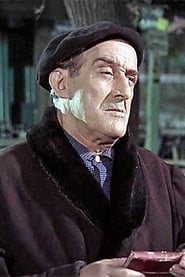 Erasmo Pascual
Priest
Erasmo Pascual
Priest
 Antonio Puga
Don Pedro's Hunting Partner #1
Antonio Puga
Don Pedro's Hunting Partner #1
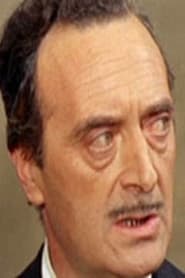 Juan Cazalilla
Don Pedro's Hunting Partner #2
Juan Cazalilla
Don Pedro's Hunting Partner #2
 Tito García
Don Pedro's Hunting Partner #3
Tito García
Don Pedro's Hunting Partner #3
DEEP DIVE
TRIVIA
THEORIES
PLOT
- Director Claudio Guerín Hill died in the film's final days of shooting on February 16, 1973, falling roughly 20 meters (about 60 feet) from a catwalk linking the real belfry of the Church of San Martiño in Noia, Galicia, to a papier-mâché bell tower built for the production. He was 34.
- The film was shot on location around Noia, Padrón, Betanzos, and A Coruña in Galicia, with interiors done at Estudios Roma in Madrid — not at the Castle of Cardona in Catalonia.
- The slaughterhouse sequence's animal killings are genuine, not simulated — star Renaud Verley reportedly performed the cattle slaying himself for several minutes of on-screen footage.
- U.S. home video cut the film down: Pathfinder's dubbed DVD release ran about 92 minutes, missing dialogue found in the longer Spanish-language version — including scenes that spell out the family's 'romantic entanglements' behind Juan's asylum commitment.
- A proper restoration was a long time coming: it took until Severin Films' 4K scan of the surviving negative, announced in 2024 as part of its 'Exorcismo' Spanish-horror box set, for the film to get a definitive high-quality release.
- Critics have increasingly ranked it among the best of Spain's 'Fantaterror' horror boom — writer Nick Pinkerton, in a Metrograph essay, calls it one of the genre's lesser-known great works and places it alongside Narciso Ibáñez Serrador's Who Can Kill a Child? as a defining rural-horror statement of the era.
Collector's Corner
🛒 BUY NOW
As an Amazon Associate we earn from qualifying purchases.