Rosemary’s Baby and the Devil of the Domestic: How Ira Levin Turned a New York Apartment Into a Coven
ScreamDesk Staff
•February 20, 2026•5 min read
Rosemary’s Baby and the Devil of the Domestic: How Ira Levin Turned a New York Apartment Into a Coven
The first time Satan appears in Rosemary’s Baby (1967), he doesn’t snarl through a pentagram or claw at the ceiling—he yawns. Or, at least, that’s what Rosemary Woodhouse assumes when her husband, Guy, returns from a midnight assignation smelling of incense and muttering about “the most intense, satisfying sleep.” Levin doesn’t just predict the future of horror—he preserves the past’s sins in amber, distilling three centuries of paranoia (the Salem trials, the McCarthy hearings, the quiet horror of a woman’s autonomy being sold for a Broadway role) into a single, suffocating apartment. The Bramford isn’t just a setting; it’s a reliquary of whispers, where every creak of the floorboards is a footstep and every neighbor’s smile is a covenant. What Levin understood—and what every subsequent architect of dread from The Exorcist (1973) to Hereditary (2018) has tried to emulate—is that the most effective horror doesn’t assault the senses; it seduces them. The novel’s genius lies in its restraint, a lesson Hollywood would spend decades unlearning. There are no jump scares, no gouts of blood, no grand guignol theatrics. Instead, Levin weaponizes the mundane: a chocolate mousse laced with “sleeping stuff,” a vitamin drink that tastes like “chalk and motor oil,” a baby who cries too little. The terror isn’t in what happens to Rosemary—it’s in what she’s told is happening, the way her own body is turned against her, her instincts dismissed as hysteria. It’s the gaslighting of God.
The Coven Next Door: How Levin Invented the Horror of the Familiar
Before Rosemary’s Baby, horror villains had addresses. Dracula had a castle. Frankenstein’s monster stalked the Arctic. The Wolf Man prowled the Carpathians. Levin, however, knew that evil didn’t need a lair—it needed a lease. The Bramford’s history is a litany of atrocity (the Trench sisters, who boiled infants; Adrian Marcato, who claimed to summon Satan in the lobby), but its real horror is its ordinariness. The building’s Gothic flourishes—a wrought-iron gate, a lobby with a “funereal grandeur”—are just window dressing. The true terror is the way Levin makes the reader complicit in Rosemary’s isolation. We see what she sees, but we’re powerless to intervene, trapped in the same polite hell of small talk and casseroles. This is the novel’s other masterstroke: its use of community as a weapon. The Castevets aren’t outsiders; they’re the ideal neighbors, the kind who remember your birthday and bring over soup when you’re sick. Their evil isn’t supernatural—it’s social. They exploit every convention of mid-century domesticity: the expectation of female obedience, the trust placed in doctors and husbands, the unspoken rule that nice people don’t accuse nice people of unspeakable things. When Rosemary finally voices her suspicions (“They’re all in it together! Every one of them!”), her outburst is met with pity, not alarm. Levin doesn’t just make his victim powerless—he makes her unbelievable.
The Adaptation That Outshone the Original
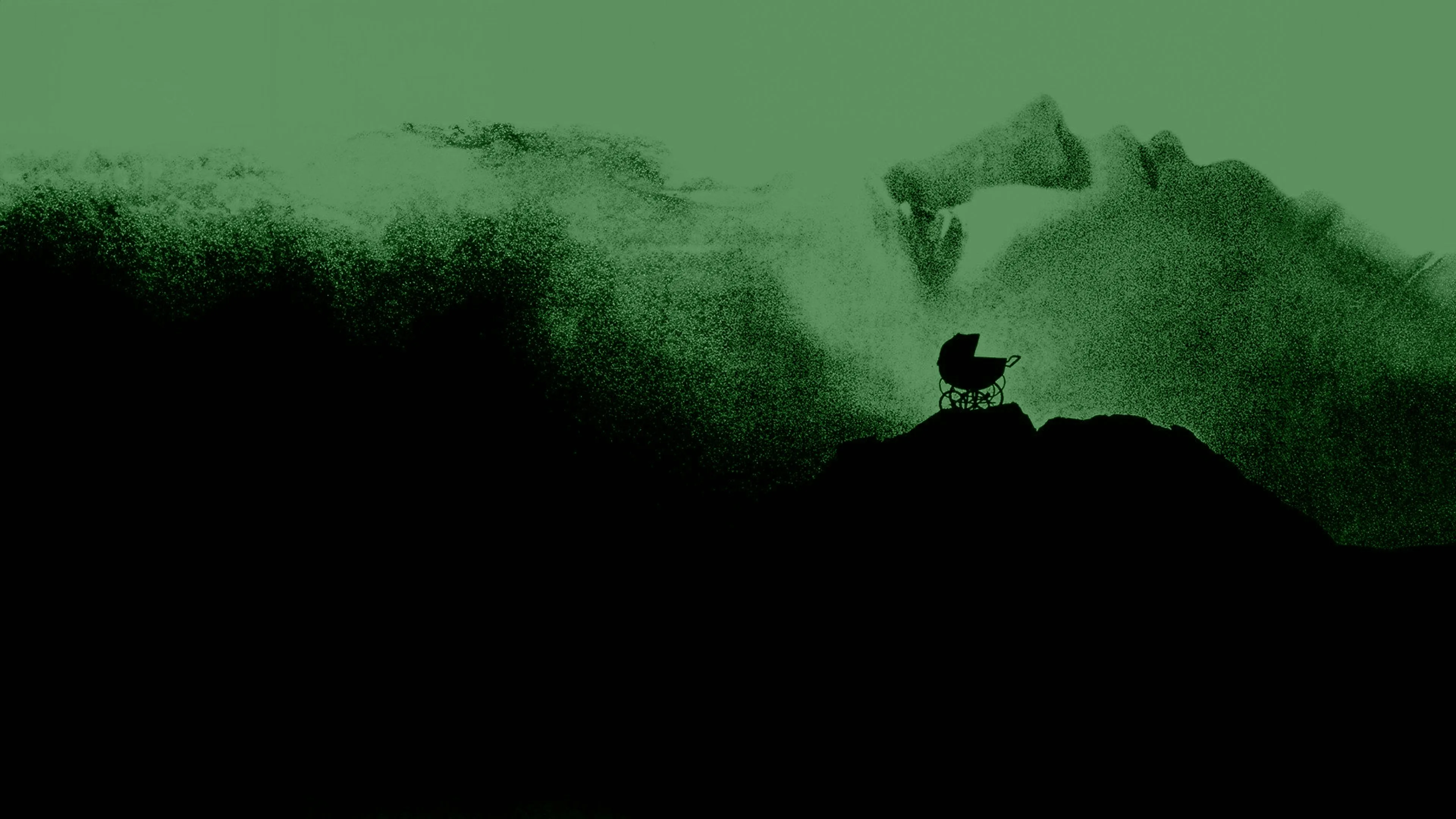
Roman Polanski’s 1968 film adaptation (a mere year after the novel’s release) is often called “faithful,” but that word undersells its achievement. Where Levin’s novel thrives on interiority—Rosemary’s diary entries, her frantic research, the claustrophobic spiral of her thoughts—Polanski’s film externalizes the dread. The camera becomes an accomplice, lingering on Mia Farrow’s gaunt face, her eyes widening in dawning horror as the pieces click into place. Ruth Gordon’s Oscar-winning turn as Minnie Castevet is a grotesque caricature of doting grandmotherly love, her coos and clucks dripping with malice. And then there’s the score: Krzysztof Komeda’s lullaby, a melody so innocuous it feels like a nursery rhyme until you realize it’s the soundtrack to a woman’s sanity unraveling. Yet the film’s most chilling moment isn’t in the script—it’s in the editing. During Rosemary’s labor, Polanski cuts between her agonized screams and the Castevets’ coven chanting in the next room. The effect isn’t just jarring; it’s erotic. The birth of the Antichrist isn’t a grotesque spectacle—it’s a domestic ritual, as mundane and inevitable as a Sunday roast. Levin’s novel laid the groundwork, but Polanski’s film enshrined the idea that the most terrifying monsters don’t lurk in the shadows—they tuck you in at night.
The Legacy: Why We’re Still Living in Rosemary’s Apartment
Fifty-seven years later, Rosemary’s Baby’s fingerprints are everywhere, though few works have the courage to admit their lineage. The slow-burn dread of The Invitation (2015), the suburban evil of Get Out (2017), the maternal paranoia of Hereditary (2018)—all are spiritual descendants, trading in the same currency of creeping unease. Even reality television owes Levin a debt. The rise of “cozy” true crime documentaries, with their obsessive focus on the mundane details of domestic life, owes a debt to Levin’s pioneering work in the genre of psychological horror. By making the familiar strange and the mundane terrifying, Levin created a new kind of horror that continues to haunt us to this day.

 ScreamDesk Staff